Winter Cycling and Off-season Training Tips to Help You Stay Fit, Motivated and Ready for Spring
When winter arrives and the temperatures drop, even the most dedicated cyclists can find it difficult to stay motivated. Shorter daylight hours, cold weather, and slippery roads can easily derail your riding routine. But with the right approach, winter can actually be one of the best times to build strength, endurance, and consistency — setting you up for a stronger, faster spring season.
In this guide, we’ll cover the best winter training tips for cyclists, from indoor training strategies and outdoor gear recommendations to nutrition, recovery, and mental focus.
Why Winter Training Matters for Cyclists
Winter isn’t just the “off-season” — it’s the foundation phase for your next year of cycling success. Whether you’re training for sportives, audax rides, or long-distance touring, the habits you build during the colder months will determine your performance later in the year.
Here’s why structured winter training is so important:
- Build Base Fitness: Lower-intensity rides help develop aerobic capacity, essential for endurance events.
- Increase Strength: Off-bike training can correct imbalances and improve power transfer.
- Prevent Weight Gain: Regular riding keeps your metabolism active when calorie burn is usually lower.
- Mental Refresh: A varied training plan prevents burnout and keeps cycling fun.
1. Train with a Purpose: Set Winter Goals
Winter can easily turn into a vague “maintenance” period — but it’s more effective if you define clear objectives.
Set SMART Goals
Use the SMART framework: Specific, Measurable, Achievable, Relevant, and Time-bound.
Example goals:
- Ride 2–3 times per week indoors.
- Improve FTP by 10 watts before March.
- Complete a 100 km virtual event before spring.
Break It Down
Divide your winter into phases:
- Base Phase (Nov–Jan): Build aerobic endurance with longer, steady rides.
- Build Phase (Feb–Mar): Increase intensity with intervals and tempo efforts.
2. Embrace Indoor Cycling
Cold weather and darkness make outdoor rides difficult — but indoor training has evolved far beyond staring at a garage wall.
Smart Trainers and Virtual Platforms
Modern smart trainers (like Wahoo Kickr or Tacx Neo) and platforms like Zwift, TrainerRoad, and Wahoo SYSTM make indoor cycling social, structured, and measurable.
Benefits:
- Controlled environment — no weather or traffic issues.
- Structured workouts tailored to your goals.
- Group rides and races for motivation.
Indoor Training Structure
Alternate between steady endurance sessions and interval workouts.
| Workout Type | Duration | Purpose |
|---|---|---|
| Endurance Ride | 60–90 mins | Build aerobic capacity |
| Sweet Spot Intervals | 45–75 mins | Improve sustained power |
| VO2 Max Intervals | 30–60 mins | Increase top-end fitness |
| Recovery Spin | 30–45 mins | Promote recovery and blood flow |
Pro Tip:
Use a fan and good ventilation — overheating is one of the biggest causes of indoor fatigue.
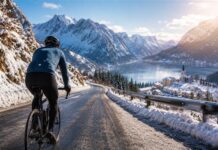
3. Get Outside (Safely)
While indoor training is convenient, occasional outdoor rides keep your bike handling skills sharp and provide valuable mental refreshment.
Layer Up for Comfort
Invest in high-quality winter cycling gear:
- Thermal base layers
- Windproof jacket
- Waterproof gloves and overshoes
- Thermal bib tights
- Neck buff and skull cap
Ride Smarter, Not Harder
- Focus on steady zone 2 endurance rides rather than intensity.
- Choose safe, well-lit routes and avoid icy backroads.
- Lower tyre pressure slightly for better grip on cold, damp roads.
Lighting & Visibility
Use powerful front and rear lights even during the day. Reflective clothing and wheel reflectors greatly increase your visibility to motorists.
4. Strength Training for Cyclists
Winter is the ideal time to build core strength and stability, which often gets neglected during the riding season.
Why It Matters
Cycling is a repetitive, linear movement — it strengthens some muscles while leaving others weak. Strength training:
- Reduces injury risk
- Improves power transfer
- Enhances climbing and sprinting efficiency
Suggested Exercises
- Squats and lunges (leg power)
- Planks and dead bugs (core stability)
- Deadlifts (posterior chain strength)
- Resistance band exercises (hip stability)
Start with two 30–45 minute sessions per week, focusing on form and controlled movement.
5. Maintain a Balanced Diet
With fewer calories burned on long rides, it’s easy to gain weight in winter. Focus on quality nutrition, not just calories.
Winter Cycling Nutrition Tips
- Prioritise protein (1.5–1.8 g per kg body weight) to maintain muscle mass.
- Include complex carbohydrates for energy during training.
- Eat plenty of fruits and vegetables to support immunity.
- Stay hydrated — dehydration is common even in cold weather.
| Nutrient Focus | Why It’s Important in Winter | Good Sources |
|---|---|---|
| Protein | Muscle repair & recovery | Eggs, chicken, Greek yogurt |
| Omega-3s | Reduce inflammation | Salmon, chia seeds |
| Vitamin D | Supports immunity & bone health | Oily fish, fortified milk, sunlight |
| Iron | Prevent fatigue | Spinach, red meat, lentils |
| Complex Carbs | Energy for training | Oats, brown rice, sweet potatoes |
Pro Tip:
Warm, slow-cooked meals like soups, stews, and porridge are great for recovery and morale after cold rides.
6. Focus on Recovery and Sleep
Cyclists often underestimate recovery during the off-season. Winter is your time to rebuild and strengthen, not just train.
Key Recovery Strategies
- Sleep: Aim for 7–9 hours per night for optimal hormonal balance and muscle repair.
- Stretching & Foam Rolling: Helps maintain flexibility and reduce stiffness.
- Active Recovery Rides: Low-intensity spins aid circulation and recovery.
- Massage & Mobility Work: Especially beneficial for older riders or those training heavily indoors.
7. Keep Motivation High
Motivation can dip when rides feel monotonous or the weather discourages outdoor activity. Combat this with mental strategies and structure.
Join a Virtual Community
Online training platforms and local clubs often have winter challenges and group rides. The social accountability helps you stay consistent.
Track Your Progress
Use training apps (Strava, TrainingPeaks, Garmin Connect) to track metrics like:
- Consistency (weekly hours)
- Power output
- Heart rate trends
- Weight and body composition
Reward Yourself
Set milestones — for example:
- New gear after completing 1,000 km
- A cycling weekend trip in spring as a reward for consistency
8. Maintain Your Bike
Winter can be brutal on your equipment, especially if you’re still riding outdoors.
Bike Maintenance Tips
- Clean your drivetrain regularly — salt and grit are corrosive.
- Apply wet-weather chain lube.
- Fit mudguards to protect you and your bike.
- Check brake pads often — grit accelerates wear.
- Store your bike in a dry place to prevent rust.
If possible, dedicate an older or “winter bike” for poor-weather riding, saving your best bike for spring.
9. Plan Ahead for the Season
Winter training is the time to look beyond the cold months and plan your riding calendar.
- Sign up early for spring sportives or audax events.
- Plan bikepacking or touring adventures.
- Schedule a bike fit or performance test to measure your progress.
Having goals in sight keeps your training purposeful.
Sample Winter Training Week (Intermediate Rider)
| Day | Workout Type | Duration | Focus |
|---|---|---|---|
| Monday | Rest / Mobility | — | Recovery |
| Tuesday | Sweet Spot Intervals (Indoor) | 60–75 mins | Build power and endurance |
| Wednesday | Strength Training | 45 mins | Core and lower body strength |
| Thursday | Endurance Ride (Indoor or Outdoor) | 90 mins | Aerobic base |
| Friday | Rest / Stretch | — | Recovery |
| Saturday | Outdoor Zone 2 Ride | 2–3 hrs | Endurance and handling |
| Sunday | Recovery Spin / Yoga | 45 mins | Flexibility and active recovery |
10. Mindset: Think Long-Term, Not Just Weather
Cycling through winter isn’t about chasing speed — it’s about consistency and sustainability. Every structured ride, strength session, and recovery day adds up to a more efficient, powerful rider when spring arrives.
Remember: Winter training builds champions — not just fitness.
Final Thoughts
Winter training doesn’t have to mean endless hours on a turbo trainer or freezing rides through icy roads. With the right mindset, smart training structure, and proper gear, you can use the colder months to improve fitness, refine technique, and strengthen your body for the season ahead.
Stay disciplined, stay warm, and remember: every pedal stroke you turn this winter is an investment in the cyclist you’ll become when the roads warm up again.